THE HISTORICAL JOURNEY OF VIETNAMESE CERAMICS – A MILLENNIUM-OLD FLOW OF HERITAGE
If stone represents ruggedness, ceramics are a refined harmony between Earth, Water, Fire, and Human Hands. Throughout thousands of years of history, Vietnamese ceramics have not merely been utility items for daily life or spiritual practices, but a "historical chronicle" recording the artistry of the Vietnamese people across every era.
Marks of the Dawn: The First Wave Impressions (10,000 BC – 1st Century BC)
Primitive Coarse Pottery: The oldest traces of ancient Vietnamese pottery were found in the Hoa Binh and Bac Son cultures (circa 10,000 BC). Back then, ancient Vietnamese people shaped clay by hand, mixing in sand or plankton shells for durability, then fired them directly outdoors at low temperatures (600°C - 700°C). The ceramic body during this era was still coarse, porous, and easily absorbed water.
The Potter's Wheel Advancement in the Dong Son Era: By the Phung Nguyen culture period, culminating in the Dong Son culture, ceramic techniques took a giant leap forward. The invention of the manual potter's wheel allowed for symmetrical forms, thinner walls, and sharper contours.
Signature Motifs: Pre-Dong Son artisans knew how to use pointed sticks and comb teeth to carve wave-like patterns, crosshatching, and concentric circles onto wet clay. Pottery steamers for cooking rice and the ceramic pipe tiles of Co Loa from this era stand as clear evidence of the Lac Viet people's practical ingenuity.
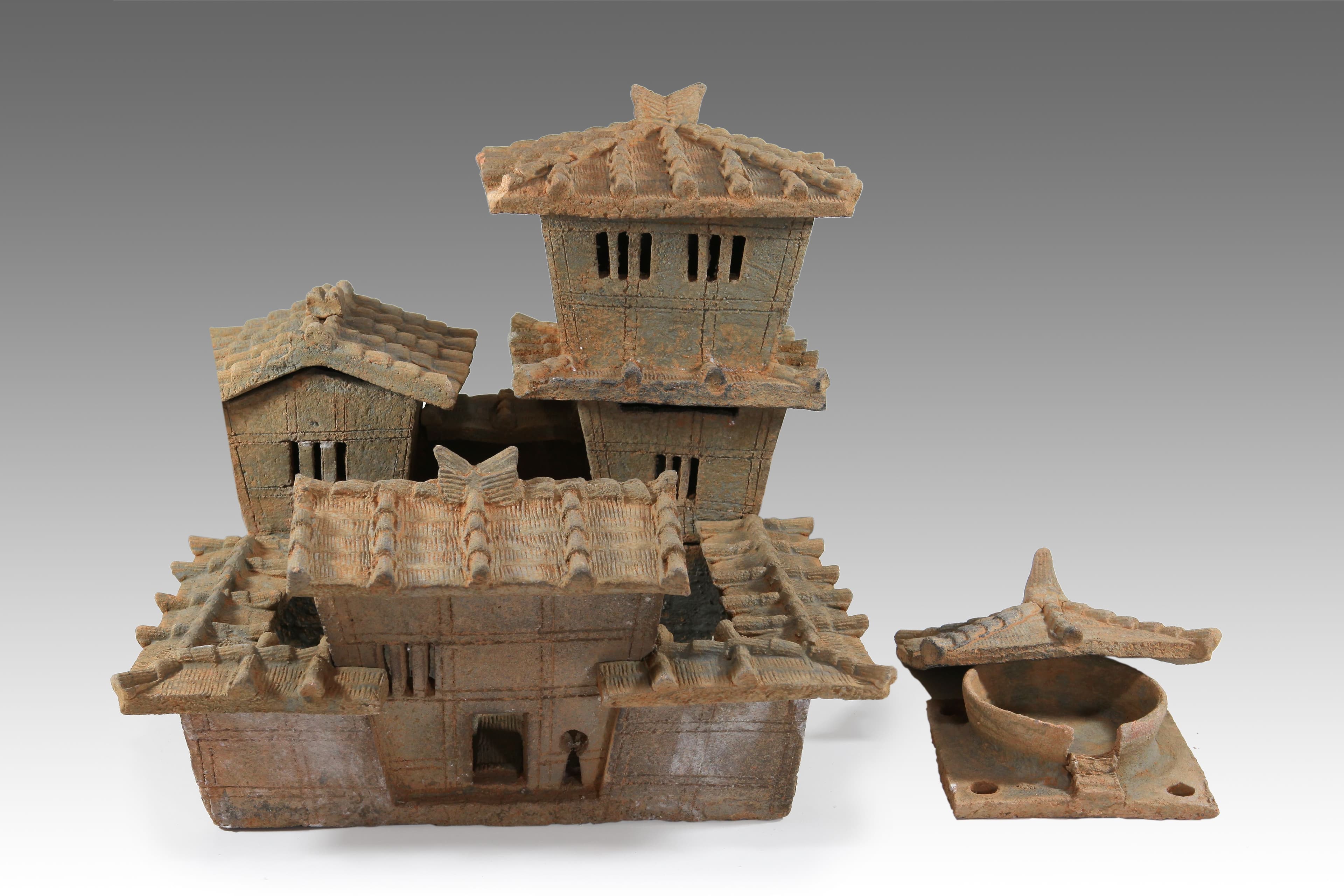
House model, 1st - 3rd century (Credit: https://baotanglichsuquocgia.vn/vi/Articles/3101/72682/gom-viet-nam-mot-truyen-thong-rieng-biet.html)
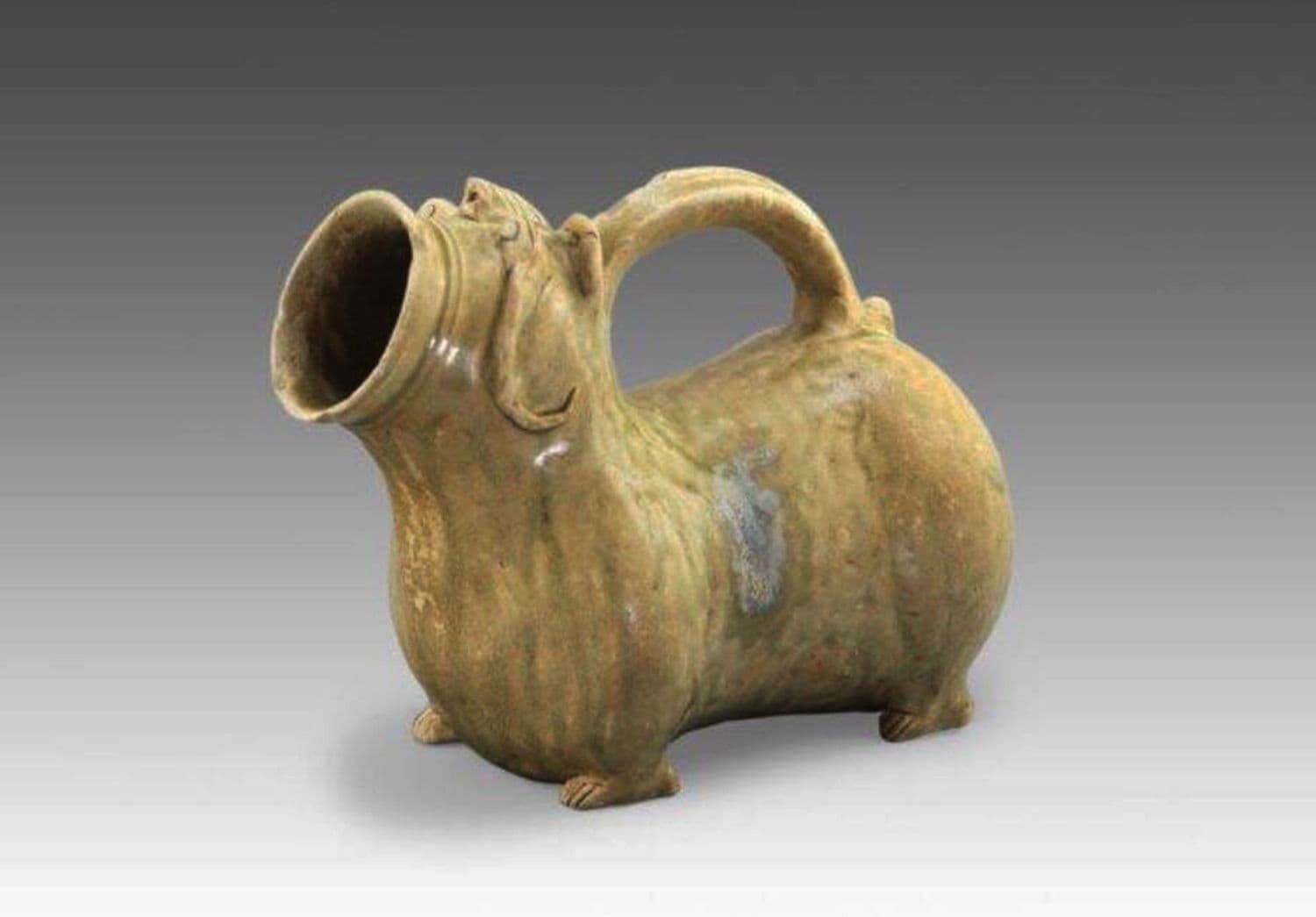
Animal-shaped vase, 1st - 3rd century (Credit: https://baotanglichsuquocgia.vn/vi/Articles/3101/72682/gom-viet-nam-mot-truyen-thong-rieng-biet.html)
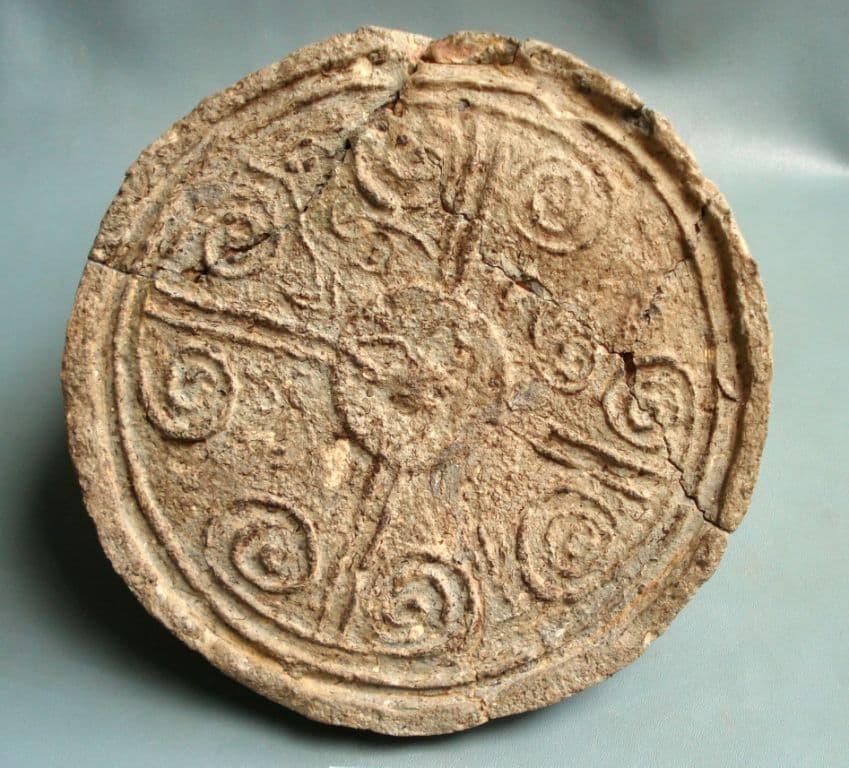
Ceramic fragment with embossed patterns (Credit: https://commons.wikimedia.org/wiki/Category:Ceramics_of_Vietnam)
The First 10 Centuries AD: Technical Adaptation & The Birth of Glazed Ceramics
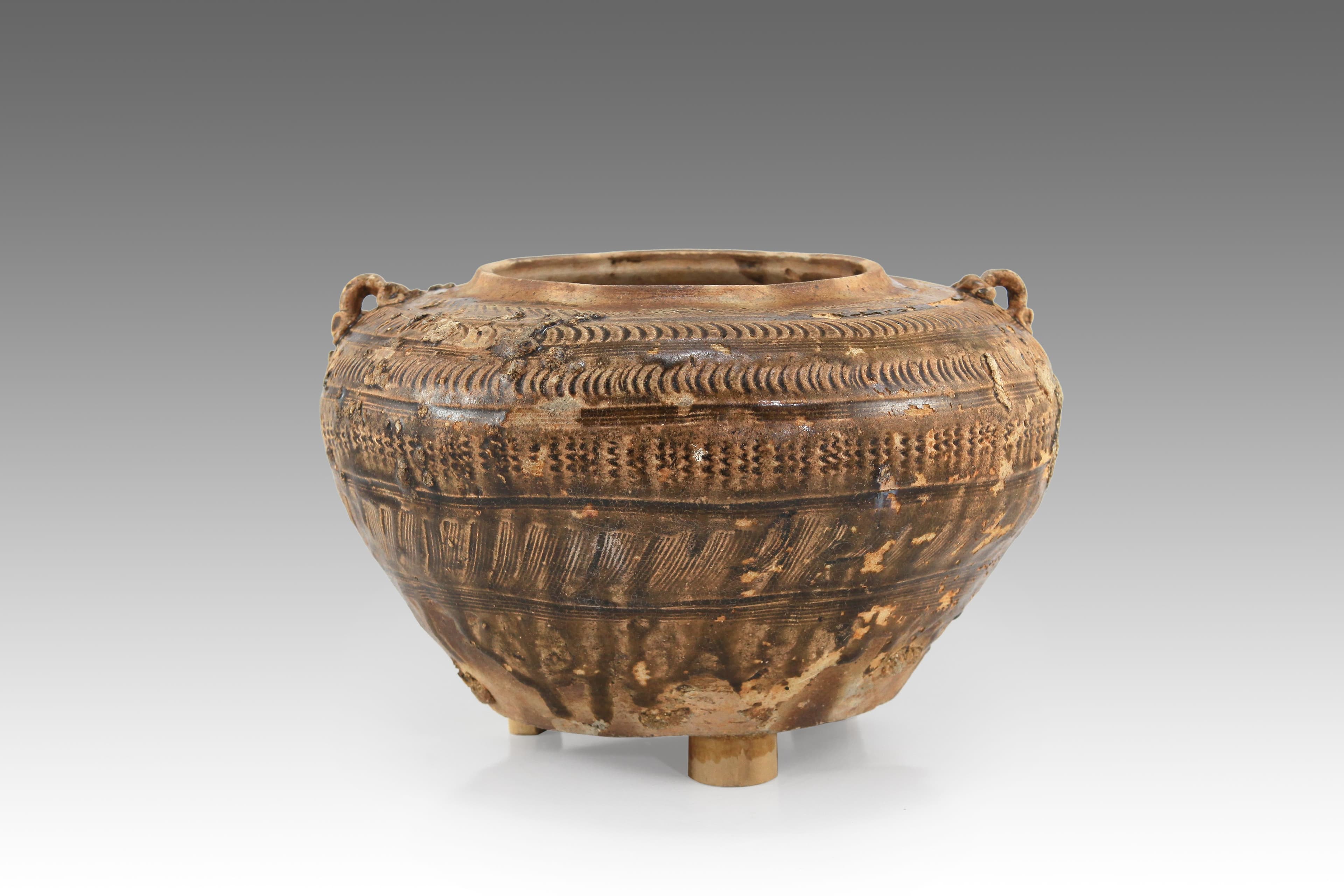
Cultural Adaptation Context: Under Northern domination, Vietnamese ceramic art faced two paths: assimilation or adaptation for self-reliance. Vietnamese artisans chose the second path. They learned high-temperature kiln building and glazing formulas from Han craftspeople while preserving native forms imbued with local identity.
The Emergence of Large-Scale Ceramic Centers: Archaeological excavations at Tam Tho (Thanh Hoa), Luy Lau, and Duong Xa (Bac Ninh) revealed large-scale ancient kiln complexes.
Breakthrough Achievements:
- Firing Temperatures: Elevated to 1000°C - 1.100°C.
- The Arrival of Glazed Ceramics: Cream, ivory, and light gray glazes emerged, featuring embossed motifs of diamond lattices, coconut leaves, lotus petals, and elephant/rooster heads on teapot spouts.
- Vietnam became one of the rare Asian nations to master glazed ceramic production early on.
Ly - Tran Dynasties (11th – 14th Centuries): The Pinnacle of Art & Autonomous Identity
The establishment of the Ly and Tran dynasties marked an era of independence and sovereignty for Dai Viet. Ceramic art during this period broke through powerfully, forming unique styles rooted in Buddhist spirituality and martial spirit.
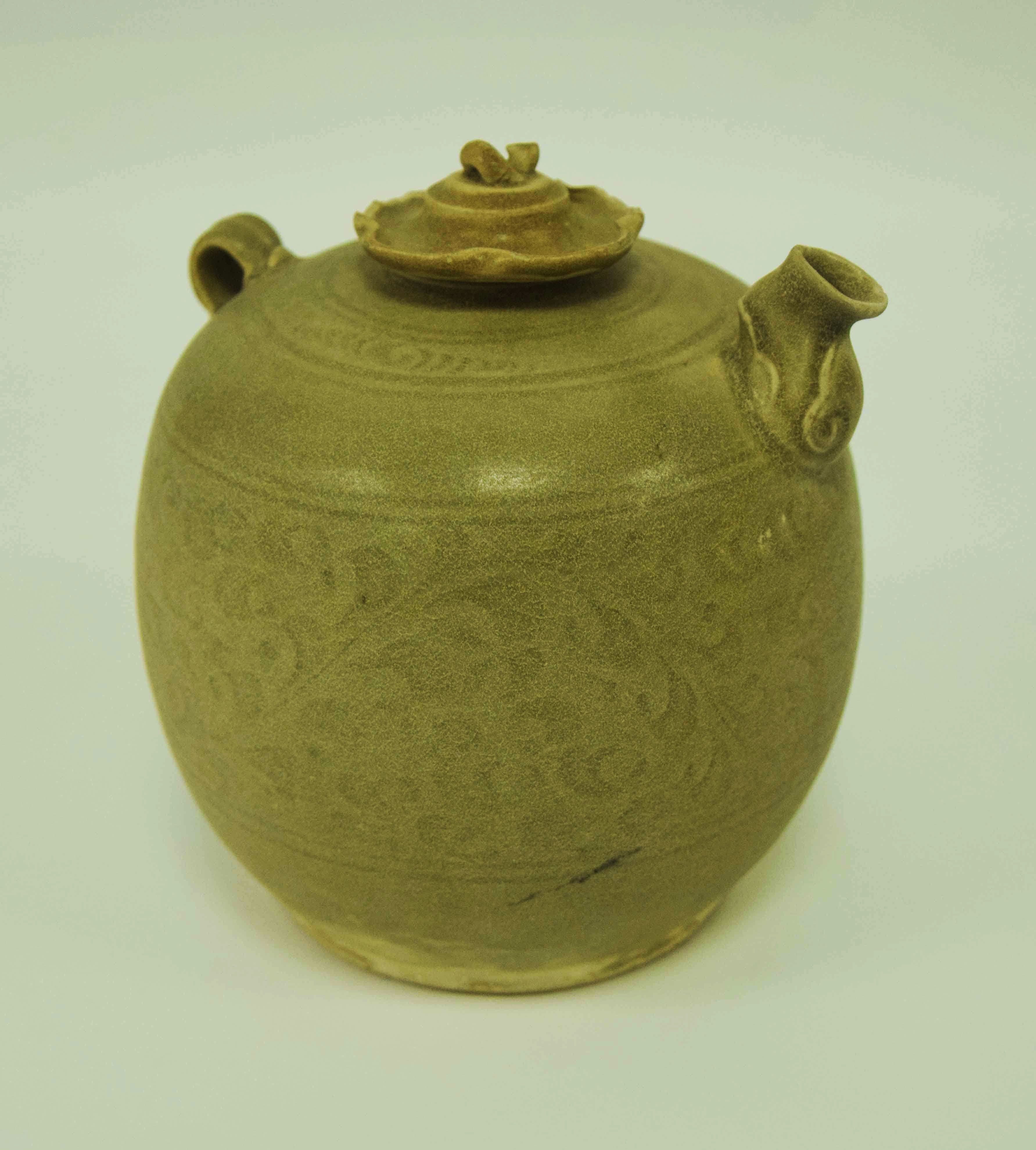
1. Ly Dynasty Celadon & White Glazes – Courtly Refinement
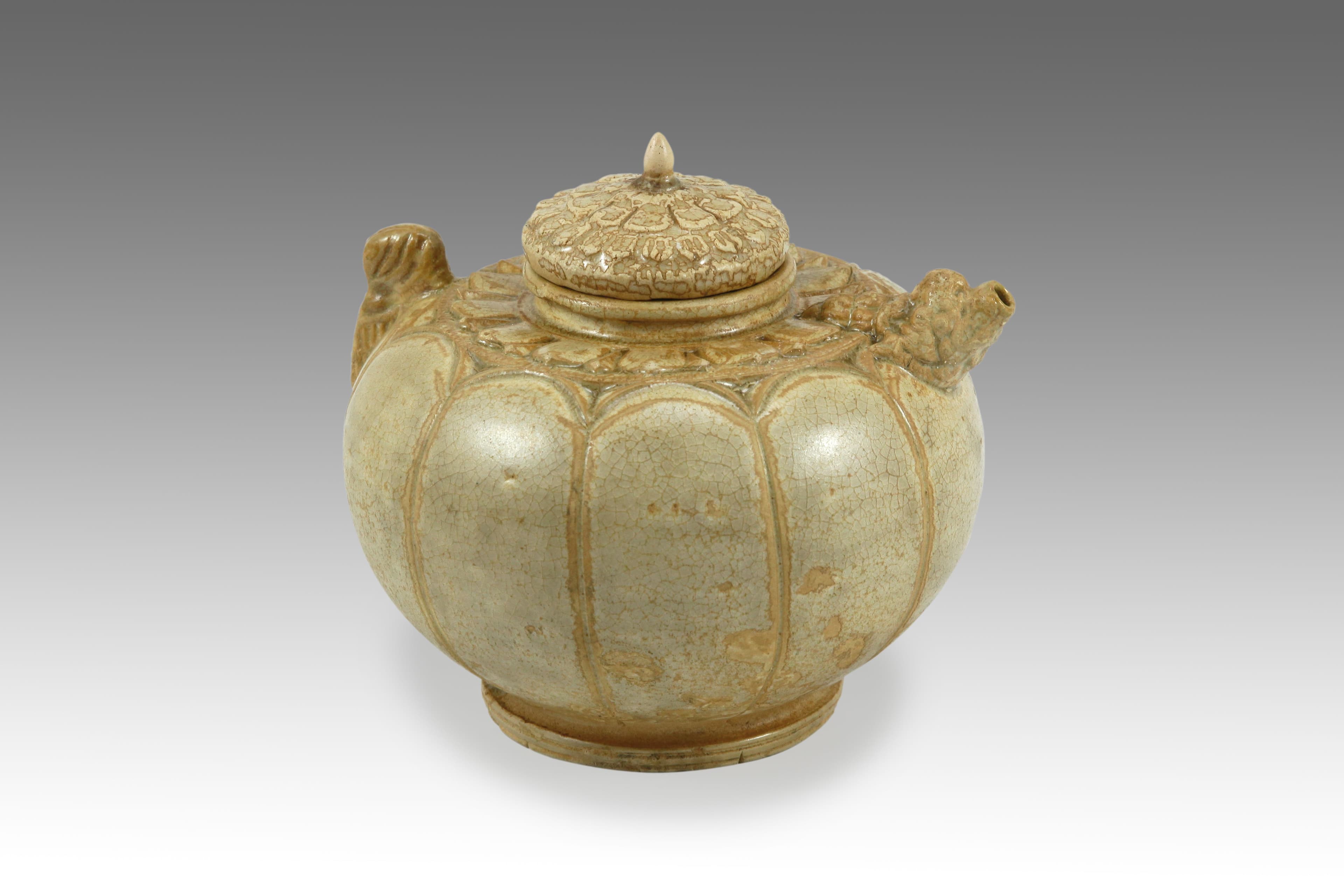
Characteristics: Ly dynasty celadon (green glaze) achieved a clarity, luster, and depth akin to jade. White glazes carried a gentle, deep ivory tone.
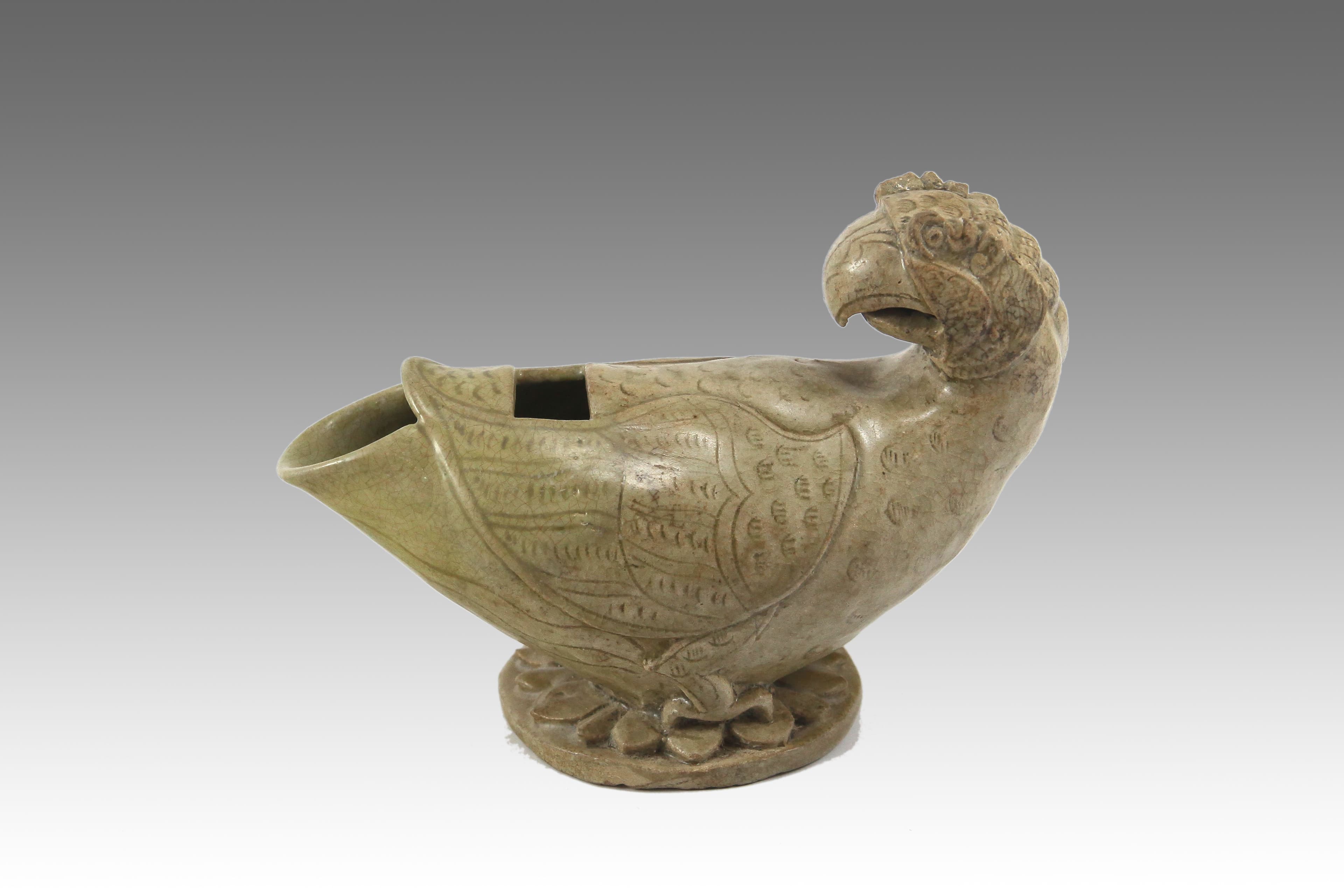
Buddhist Motifs: Patterns were carved chiseled or appliquéd with extreme precision—featuring leafy chrysanthemums, blooming lotuses, teardrop-shaped Ly dragons, and the mythic Garuda bird. These pieces directly served the Thang Long Imperial Citadel and Buddhist monastic centers.
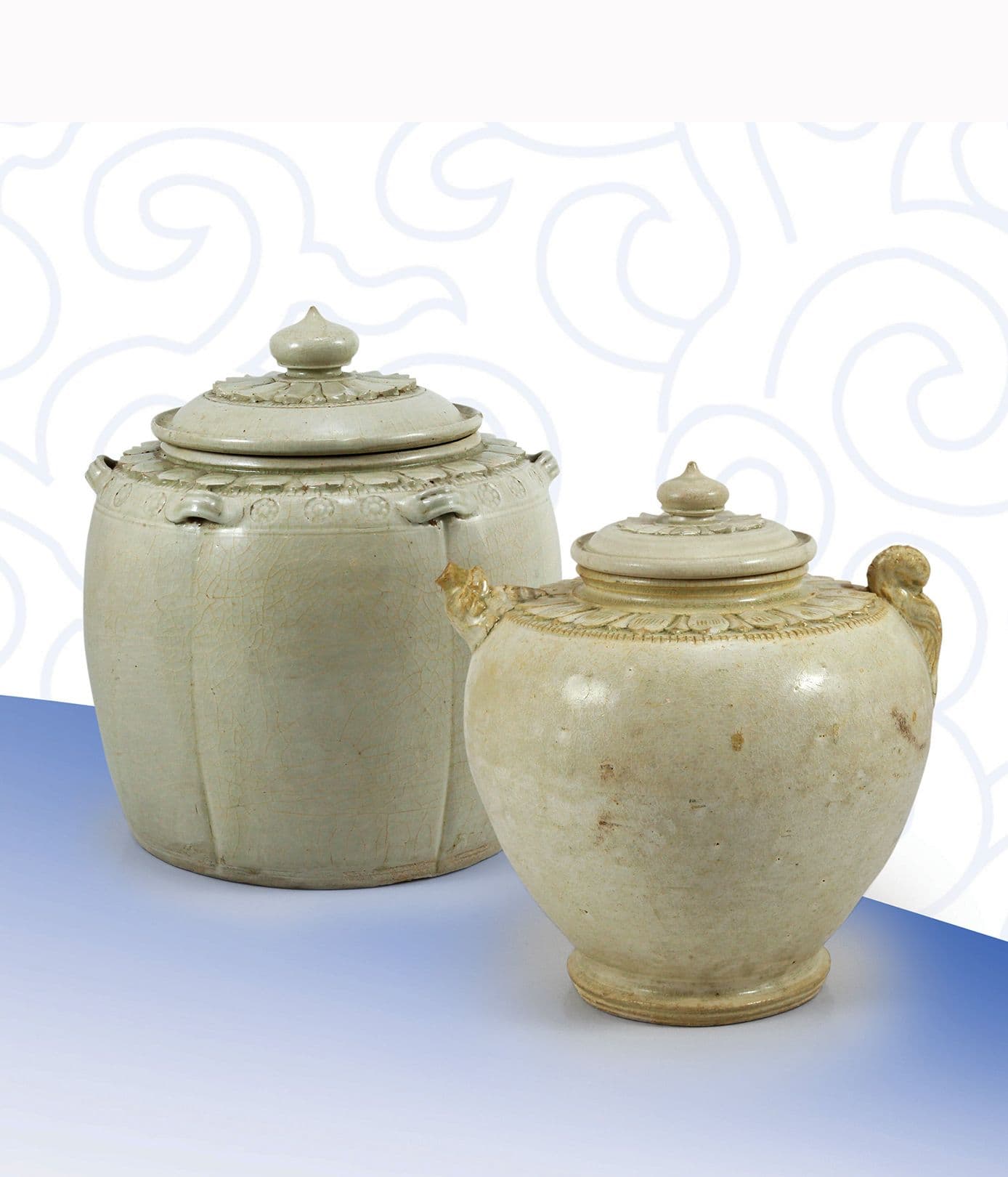
White-glazed jar and teapot, 11th - 13th century (Credit: https://baotanglichsuquocgia.vn/vi/Articles/3101/72682/gom-viet-nam-mot-truyen-thong-rieng-biet.html)
2. Tran Dynasty Brown-Patterned Ceramics (Gốm Hoa Nâu) – Rustic & Liberated Soul
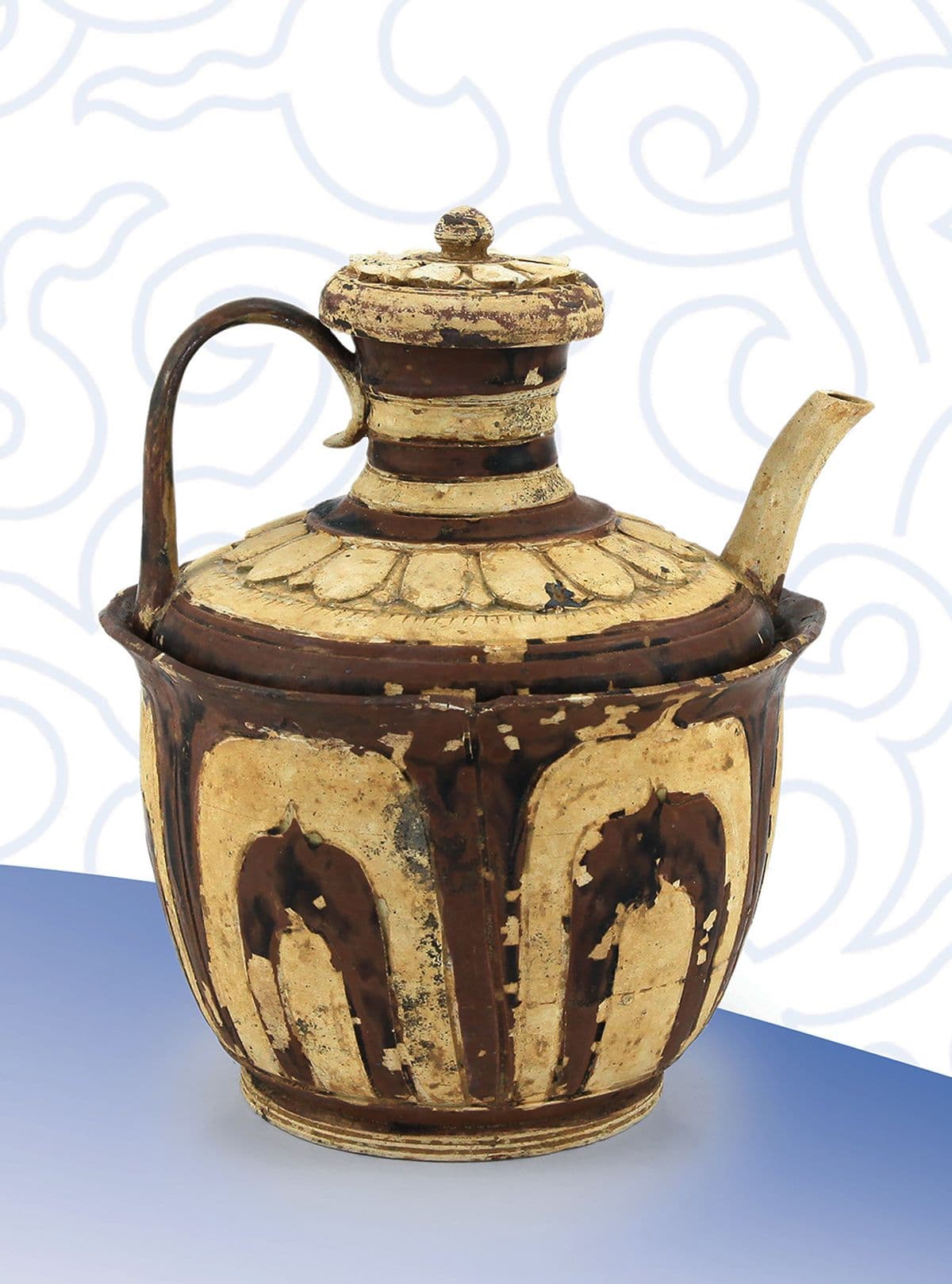
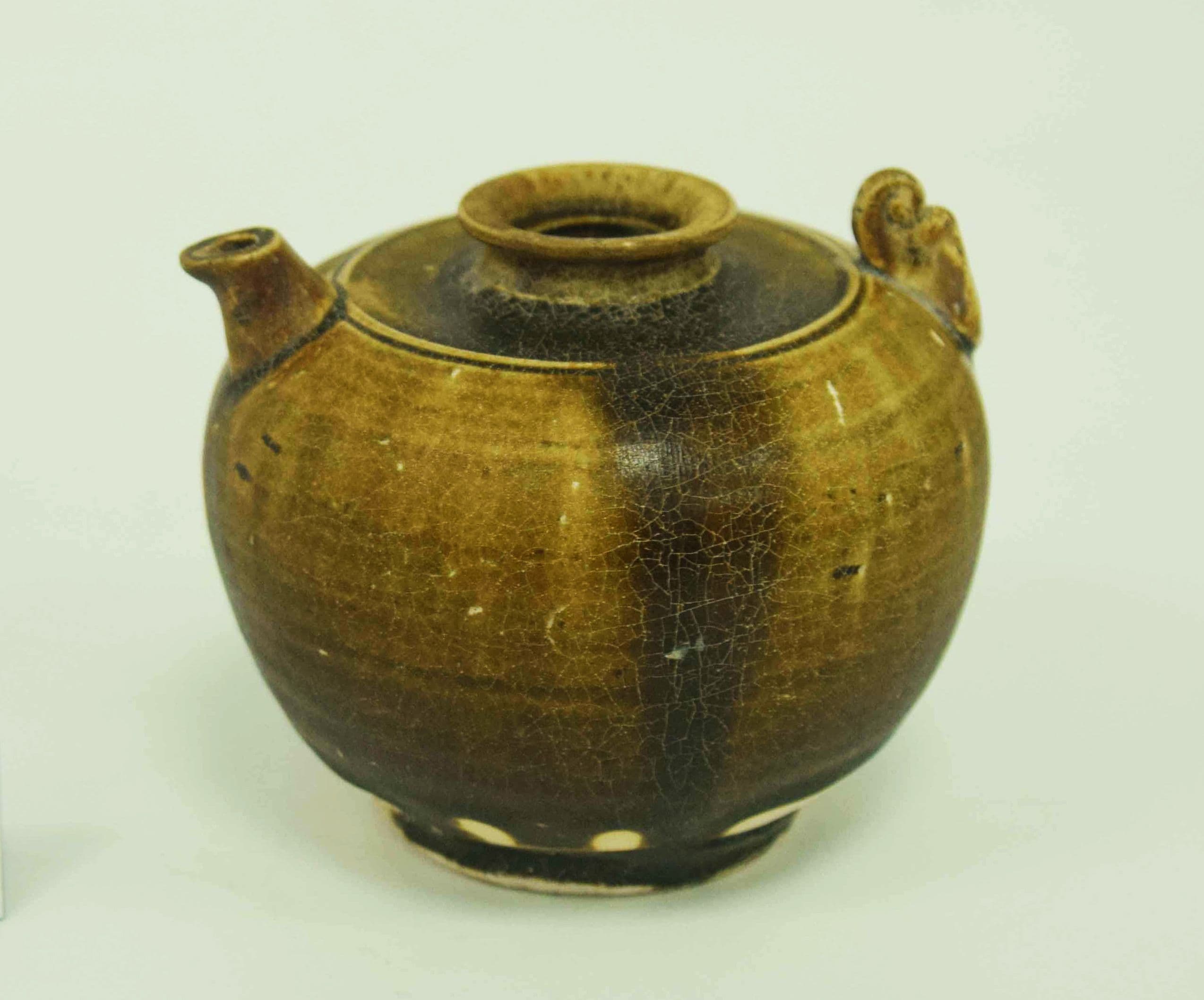
A Unique Hallmark: While Northern traditions favored glossy ceramics, Tran Dynasty potters invented a brown-patterned ceramic line unique in the world. On an ivory or pale yellow glaze background, artisans scraped away the glaze layer to paint iron-oxide mineral slip, creating bold brown motifs.
Themes: Highly spirited motifs depicting spear-dancing warriors, birds, elephants, weight-throwing fish, and lotus flowers. These compositions fully captured the resilient Dong A spirit—liberated, rustic, yet deeply confident.
Le So - Mac - Le Trung Hung Dynasties (15th – 17th Centuries): The Golden Age of Export Ceramics
1. The Boom of Blue-and-White Ceramics & The Chu Dau Center
Blue-and-White Ceramics (Gốm Hoa Lam): Used cobalt oxide to paint blue motifs onto white ceramic bodies before applying a clear glaze and firing at 1.200°C - 1.300°C.
Royal & Everyday Mastery: Production hubs like Bat Trang (Thang Long) and Chu Dau (Hai Duong) attained master craft levels. Motifs of oriental magpies, carp, and landscape scenes were painted with fluid brushstrokes, resembling ink wash paintings on clay.
2. Global Maritime Trade Routes
Cultural Ambassadors on the Waves: Vietnamese ceramics traveled via Portuguese, Dutch, Japanese, and Persian merchant ships across the globe.
Historical Proofs:
- The Cu Lao Cham Shipwreck: Over 240,000 intact Chu Dau ceramic artifacts were excavated from the seabed, proving immense commercial production capacity.
- The Chu Dau Vase at Topkapi Saray Museum (Turkey): Inscribed with Chinese characters reading: "Painted by artisan Bui Thi Hau of Nam Sach district, 8th year of Thai Hoa reign". This stands as invaluable proof of a 15th-century Vietnamese female potter's master talent.
3. Mac Period Ceramics & Personal Signatures
Large Ritual Ceramics: Multi-tiered incense burners and lamp stands appeared with elaborate relief work, finished in blue and ivory glazes.
Inscribing Identities: Unlike many anonymous ceramic traditions, Mac-era potters (notably Dang Huyen Thong) proudly carved their names, hometowns, and production dates directly onto the works.
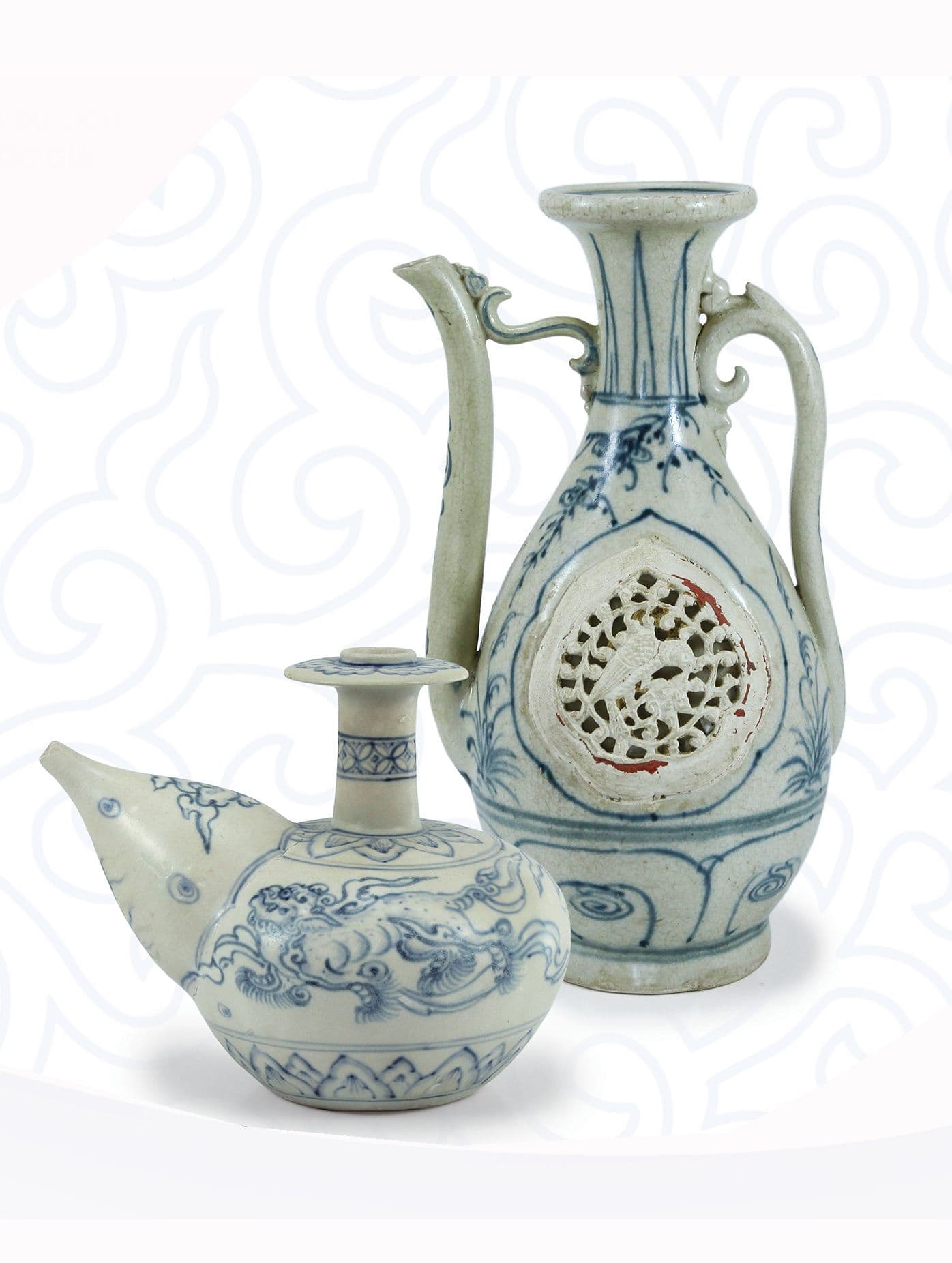
White-glazed ewer and kendy, 15th century (Credit: https://baotanglichsuquocgia.vn/vi/Articles/3101/72682/gom-viet-nam-mot-truyen-thong-rieng-biet.html)
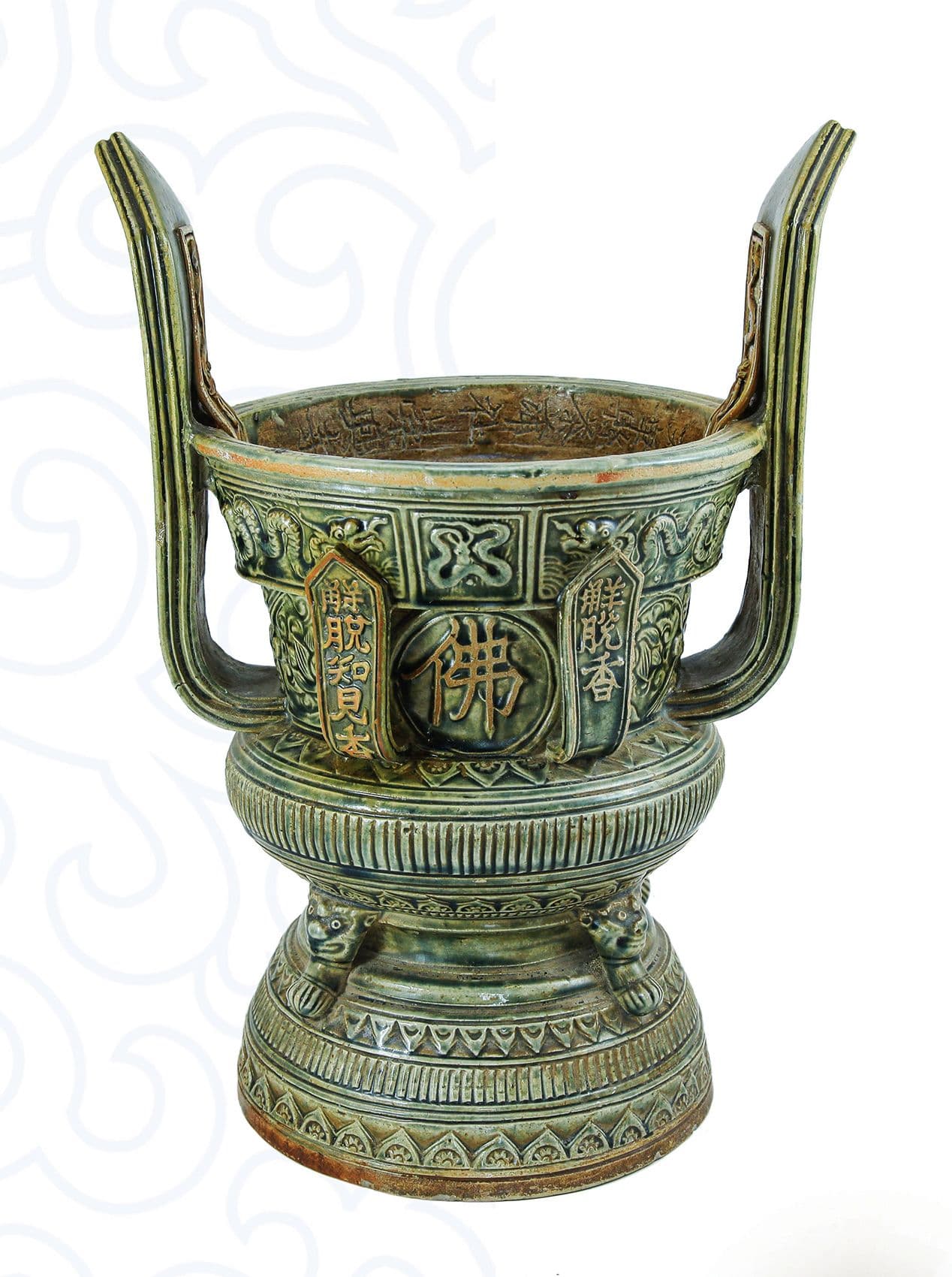
Grayish-blue glazed ceramic incense burner, 16th century (Credit: https://baotanglichsuquocgia.vn/vi/Articles/3101/72682/gom-viet-nam-mot-truyen-thong-rieng-biet.html)
18th – 19th Centuries: Return to Domestic Markets & The Flourishing of Craft Villages
As international maritime routes shifted and the Nguyen Dynasty enforced closed-border sea policies, Vietnamese ceramics halted export booms but rooted deeply into local spiritual and domestic life.
Bat Trang & Refined Crackle Glaze: Bat Trang secured top status with its signature crackle glaze (men rạn—fine eggshell crack lines created by thermal expansion differences between glaze and body). Blue crackle-glazed altar sets, incense burners, and mythical lion statues brought an ancient, solemn grace.
Regional Craft Diversity:
- Phu Lang (Bac Ninh): Renowned for warm, rustic eel-skin glazes fired with wood.
- Bien Hoa (Dong Nai): A fusion of Vietnamese, Chinese, and French styles, yielding vibrant, multi-colored artistic ceramics.
- Bau Truc (Ninh Thuan): Cham pottery preserved primitive traditions - crafted without a wheel (artisans walk backward around the clay mound) and open-fired using straw and brushwood.
Epilogue: Bridging Heritage & Modern Living
The history of Vietnamese ceramics is an unbroken continuum where every dynasty left a distinct material impression: the raw texture of Dong Son, the elegance of Ly, the rusticity of Tran, the poetic flair of Le, and the quiet dignity of Nguyen.
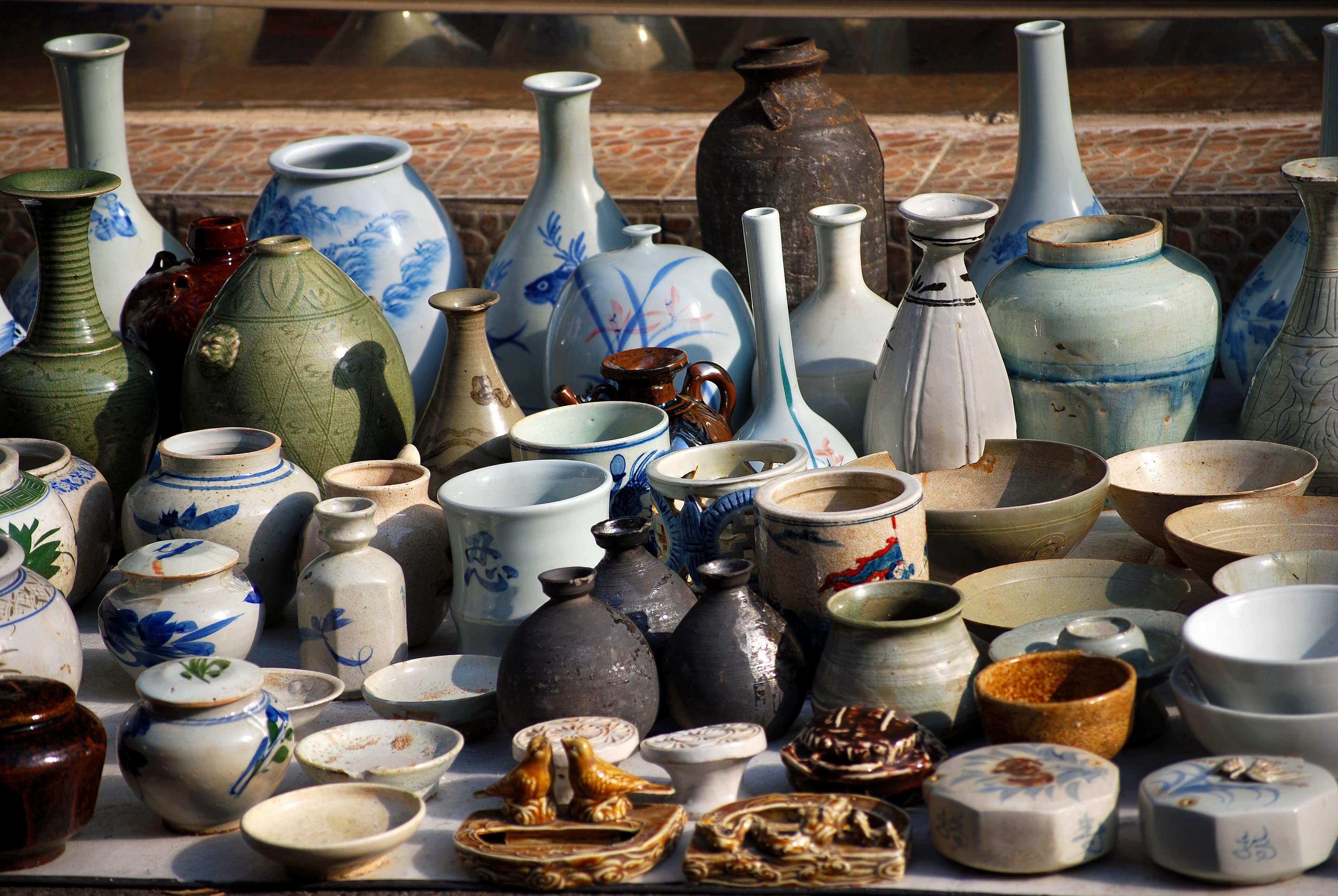
Today, ceramics are no longer confined to museum displays or everyday kitchenware. Modern ceramic art is undergoing a vibrant transformation: preserving hand-throwing, clay selecting, and traditional glazing while embracing minimalist architectural forms, spatial harmony, and emotive design philosophy - allowing a thousand-year heritage to shine brightly in the contemporary home.