Written by Kim Ky Ceramic - a ceramic brand specializing in handcrafted porcelain flowers and relief ceramic art.
Ceramic porcelain flowers are decorative pieces shaped from clay or kaolin, fired at high temperatures, and finished with a glaze that gives them lasting color and a glossy surface. Unlike silk flowers made from fabric or synthetic materials, or unfired clay flowers, ceramic porcelain flowers offer exceptional durability, fade-resistant color, and a distinct artistic value.
If you're exploring durable, artistically rich decor pieces - or a meaningful gift - this guide walks you through what ceramic porcelain flowers are, how they're made, and how they compare to silk and clay flowers.

What Are Ceramic Porcelain Flowers?
Ceramic porcelain flowers (also called ceramic flowers or porcelain flowers) are handcrafted decorative pieces. Artisans shape each petal, stamen, and leaf from clay or kaolin, then fire the piece at high temperatures (typically above 1000°C / 1832°F) to achieve permanent hardness and durability. After the initial (bisque) firing, the piece is coated with a glaze - colored, crackled, or glossy - and fired a second time to create shine and protect the surface.
The craft of making ceramic porcelain flowers is deeply rooted in Vietnam's traditional pottery villages, where hand-shaping techniques for petals and leaves have been passed down through generations of artisans. Because of this, every ceramic flower carries a handmade signature - no two pieces are ever exactly alike. At Kim Ky Ceramic, every porcelain flower and relief ceramic artwork is handcrafted in this spirit, preserving the individuality of each piece.
each petal, stamen, and leaf from clay or kaolin was shaped by artisans
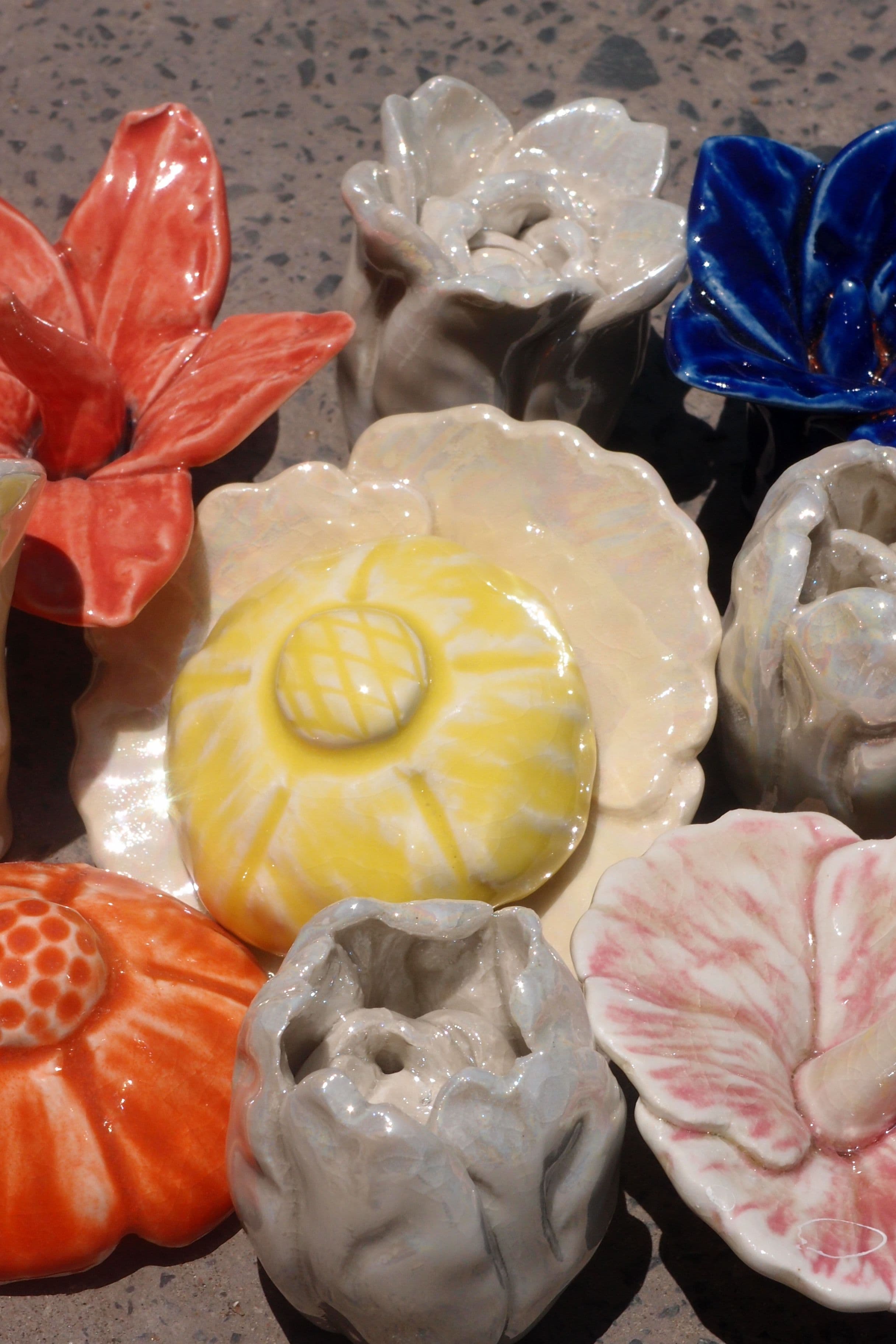

Key characteristics of ceramic porcelain flowers:
- Hard, solid material with real weight in hand
- Glossy or matte surface depending on the glaze, with deep, natural color from firing
- Fade-resistant under sunlight and over time
- Can be wiped or washed with water without damage
How Ceramic Porcelain Flowers Are Made
Creating a single ceramic porcelain flower involves several meticulous steps:
- Shaping the clay - Artisans knead clay or kaolin to the right consistency, then hand-shape or sculpt each petal, stamen, and leaf according to the design.
- Air-drying the raw piece - The shaped piece is air-dried or dried in a controlled environment to reduce moisture and prevent cracking during firing.
- Bisque firing - The piece undergoes an initial firing at moderate temperature to achieve early structural strength.
- Glazing - A colored glaze is applied to the surface — this step determines the final color and shine of the piece.
- Glaze firing - The piece is fired again at high temperature so the glaze melts evenly and bonds tightly to the ceramic body, creating durability and a finished aesthetic.
- Assembly and finishing - Individual petals and leaves are assembled into a complete flower or branch, then quality-checked before leaving the workshop.
The full process can take anywhere from a few days to several weeks depending on the design's complexity - which is why every ceramic porcelain flower carries significant time and craftsmanship value.
Ceramic Porcelain Flowers vs. Silk Flowers vs. Clay Flowers
| Criteria | Ceramic Porcelain Flowers | Silk Flowers | Clay Flowers (unfired) |
|---|---|---|---|
| Material | Fired clay/kaolin, glazed | Fabric or synthetic fibers | Air-dried clay, not fired |
| Durability | Very high, lasts for years, fade-resistant | Moderate, fades and collects dust over time | Low, fragile, easily damaged |
| Water/moisture resistance | Good, can be wiped or washed | Poor, damaged by prolonged moisture | Very poor, dissolves with water |
| Feel/touch | Hard, cool, with real weight | Soft, lightweight | Hard but brittle, chips easily |
| Cleaning | Easy, wipe or rinse with water | Dust only, light dry wiping | Cannot be cleaned with water |
| Aesthetic value | Elegant, rich glaze depth | Varied colors, soft natural look | Rustic, simple |
| Price range | Higher (due to firing and hand-glazing) | Low to moderate | Low |
| Best for | Living rooms, altars, premium gifts | Quick decor, tighter budgets | Light, short-term display |
When should you choose ceramic porcelain flowers? If long-term durability, artistic value, and a meaningful gift (housewarming, grand opening, longevity celebrations) matter to you, ceramic porcelain flowers clearly outperform silk or plain clay flowers.
When are silk or clay flowers a better fit? For temporary decor, tighter budgets, or frequent style changes, silk flowers remain a flexible, cost-effective choice.
Key Advantages of Ceramic Porcelain Flowers
- Outstanding durability: Fade-resistant and dust-repellent compared to silk flowers, staying beautiful for years of display.
- No pests, no mold: Ceramic material is completely inert to the environment, unaffected by insects or moisture the way dried or clay flowers are.
- Artistic and premium gifting value: Each piece results from a meticulous handmade process, making it ideal for housewarmings, grand openings, or elevated interior spaces.
- Eco-friendlier material: Made from natural clay and mineral glazes rather than synthetic plastics like silk flowers.
Are There Any Downsides to Ceramic Porcelain Flowers?
For a balanced view, here are a few things to keep in mind:
- Fragile under impact: Being ceramic, pieces can chip or break if dropped or struck hard — best displayed in a fixed, stable spot away from small children.
- Higher price point: Compared to silk or plain clay flowers, ceramic porcelain flowers cost more due to the multi-step handcrafted firing process.
- Heavier weight: Placement should be considered carefully to ensure a stable, secure surface.
Frequently Asked Questions
Want to learn more about the full handcrafted production process, or browse Kim Ky Ceramic's porcelain flower collection?